Plant biotechnology
-
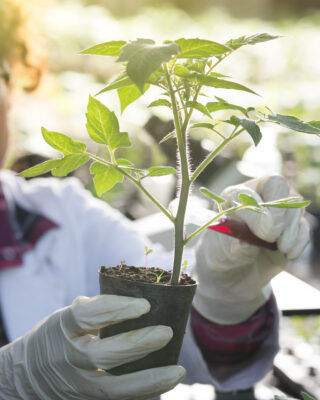
Plant biotechnology (also commonly referred to as agricultural biotechnology, genetically modified organisms or GMOs) brings many benefits for agriculture, the environment and society.
-
Biotech crops continue to increase their share of global agriculture – over 90 million hectares were grown in 2005, with the rate of uptake being highest in developing countries.
-
CropLife International continues to actively support capacity-building initiatives to make sure that all countries are equipped to make informed, science-based decisions regarding the use of plant biotechnology in their borders.
-
The plant science industry supports best practices and standards at all stages during the development and commercialisation of crops derived from biotechnology, or GMOs.
Since the first commercial biotech crops were grown in 1996, plant biotechnology has proved to be the most rapidly adopted new technology by farmers ever. All the indications are that this growth will continue, particulary in developing countries.
The area sown to biotech seed has soared to some 90 million hectares worldwide, with an increase of 11% in 2005 alone. North and South America still account for the largest areas, and this will continue to be the case for the near future, with the recent approval and adoption of biotech seeds in Brazil.
The rate of growth has been most rapid in other regions, mainly in the developing world, and particularly in the major emerging economies of China and India. More European farmers are now planting biotech seeds for the first time because of the clear benefits they bring. From an established base in Spain, farmers in France, Portugal, Germany and the Czech Republic are now growing these crops.
Crops commercialised to date have all been modified to improve agronomic traits: insect resistance and herbicide tolerance or a combination of the two. Quality traits, such as crops that produce healthier cooking oils and fruits and vegetables fortified with vitamins, are now close to market. The parallel need to supply renewable raw materials for the sustainable biological industrial processes of the future means that the products of plant biotechnology are set for continued growth and growing acceptance across all regions. Learn more about the benefits of plant biotechnology.
CropLife International works to ensure rational, science-based regulations that maximise the benefits of plant technologies and enable continued research.
We work to ensure that international treaties, such as the Cartagena Protocol on Biosafety, are implemented in a way that allows countries to make informed choices about the use of plant biotechnology within their borders.
In addition, we support a lifecycle approach to stewardship of our products – from gene discovery through to product phase-out.
We are also active in increasing the awareness of the environmental, societal and economic benefits associated with plant biotechnology through our outreach programmes around the world and through our database on the safety and benefits of plant biotechnology.

Chemical crop protection
-
Chemical crop protection products or “pesticides” help control insects, diseases, weeds, fungi and other undesirable pests.
-
Pesticides comprise a wide range of products for both professional and home applications including insecticides, fungicides, herbicides, sanitizers, growth regulators, rodenticides, and soil fumigants.
-
The use of chemical crop protection in all contexts is highly regulated.
-
The regulatory framework of pesticides encompasses national, regional, and international legislation and conventions that help assure safety for users, consumers and the environment.
Chemical crop protection products, commonly referred to as pesticides or agrochemical products, play a vital role in controlling the pests and diseases that threaten our food supply.
Consumers in the developed countries expect to choose from an abundant supply of fresh, high quality foods that meet our nutritional needs, whilst being affordable and accessible all year-round. As with many hallmarks of modern society, we take all of this for granted.
In developing countries chemical crop protection is used as a means to help farmers improve agricultural productivity, contribute to food security and alleviate poverty. Improvement if farmer community livelihoods, and the accompanying social benefits to developing economies have followed.
With the growing global populations constantly challenging food production, crop protection products offer a means towards meeting the challenge of more food, less land.
Food crops must compete with 30,000 species of weeds, 3,000 species of nematodes and 10,000 species of plant-eating insects. We know that despite the use of modern crop protection products 20-40% of potential food production is still lost every year to pests. These losses can occur while the crop is growing in the field, when it is in storage and in the home. In short, an adequate, reliable food supply cannot be guaranteed without the use of crop protection products.
Whilst recognising the important role of pesticides in society, it is important to note that the safety of pesticides for users, consumers, and environmental impact is carefully regulated. Product registrations, permitting sale within a country, are based upon comprehensive safety assessments and defined product uses. Each product has a specific application that is clearly indicated on the label. Whilst these regulatory aspects are carefully considered prior to commercial sale, the lifecycle approach to pesticide management dictates that manufacturers extend their safety considerations through the entire lifespan of the product. This commitment is referred to as “product stewardship.”
Safety considerations pertaining directly to product use include education and training programmes that relay how products can be used safely and efficiently. Whilst avoiding some of the inherent risks of sometimes harmful or toxic chemicals is critical, end-users aware of the hazards and taking the recommended precautions are keen to learn how products can be more effectively applied to increase productivity and save input costs. These two concepts broach the areas of safe/responsible use and integrated pest management.

Benefits of plant science
-
The plant science industry uses its skills in both chemistry and biotechnology to develop products – crop protection products and seed – which deliver benefits to the farming sector.
-
The industry does its best to deliver these benefits safely to farmers through intensive programmes of risk assessment and stewardship.
-
Society as a whole also benefits by having available an assured supply of safe, high quality, affordable food.
The products marketed by the plant science industry bring many benefits to farmers, the environment, and consumers. Without industry’s products, services and technologies, yields would be lower and the environmental footprint of agriculture greater.
To meet the food, feed and fibre needs of a growing and more prosperous population, against a backdrop where 800 million people still endure hunger and malnutrition, is no easy task and farmers need the choice of all the tools that modern agricultural science can place at their disposal. Increasing use of biomass as an industrial raw material and to produce bio-fuels to meet the needs of growing economies in an environmentally sustainable way will only increase the demands on agricultural production.
Click here to find out more about the benefits of plant biotechnology.
Click here to find out more about the benefits of pesticides.
Click here to learn more about the plant science industry’s contribution to sustainable agriculture and development.

Sustainability
-
Sustainability means producing sufficient quantities of safe and healthy food, while improving the livelihoods of food producers and preserving precious environmental resources for future generations of farmers and consumers.
-
New global sustainability challenges require input from the plant science industry.
-
Plant science products and technologies, used appropriately, improve product quality, increase yields and help achieve agricultural sustainability.
“Our biggest challenge in this new century is to take an idea that seems abstract - sustainable development - and turn it into a daily reality for all the world’s people…” - Kofi Annan, UN Secretary-General. Sustainability has three main facets: economic, environmental and social. In the agricultural sphere, the plant science industry makes a significant contribution to improving all three aspects.
The plant science industry invents, develops, manufactures and delivers innovative products, technologies and services designed to improve the global production of food, feed and fibre and other useful products in a sustainable way.
Improvements in agricultural technologies and practice mean that today’s population has more food per head available to it than 40 years ago, when there were only half the number of mouths to feed and about the same land area was farmed. In addition to increasing crop yields in many parts of the world, advances in agricultural technologies have also contributed to a safer food supply, and in some cases, improved environmental quality.
Over the next 30 years, agriculture will have to sustain an additional 2 billion people from an increasingly fragile resource base. Available arable land is decreasing, water is becoming scarcer and consumers are demanding a more varied diet, along with better nutrition, quality and safety of food products. In addition, many are looking to agriculture as a new source of renewable energy and industrial raw materials.
We must do all of this without harming the environment and the resource base for future generations of farmers and consumers.
These increasing demands and pressures mean that agriculture has to become even more productive, efficient and environmentally sound. This will require the continued application of new scientific knowledge, improved resource management and sustained public and private research investment in emerging technologies.
The plant science industry fully supports the international community’s recognition that major improvements in agricultural performance are fundamental to achieving the overall goals of sustainable development, as put forth in Agenda 21, signed by 100 heads of state and governments in Rio de Janeiro in 1992, and reaffirmed during the 2002 World Summit on Sustainable Development held in Johannesburg.
We are committed to being “part of the solution,” and will continue to provide innovative approaches that protect the environment, enhance the economic viability of farms and rural livelihoods, and improve the quality of life for farmers and their communities.
To accomplish this, we work hand-in-hand with a range of stakeholders, including farmers, international organisations, NGOs and the public sector. Some of the things we do for sustainability include:
-
Undertake locally adaptive fieldwork and provide technical services and training to ensure the safe and effective use of our products around the world, and particularly in developing countries.
-
Work with a network of qualified personnel and partner organisations to test, analyze, and disseminate products and techniques that address different needs and priorities.
-
Work closely with farmers in product testing and development in order to optimise the relevance and acceptance of our products and technologies.
-
Share knowledge and experience to inform decisions on issues related to international and national policies, regulations and funding for sustainable agriculture and economic development.
Sustainability is our main priority. Why? Sustainability of the environment ensures sustainability of agriculture. Sustainability of agriculture ensures sustainability of our business.

Stewardship
-
Industry works in partnership with other stakeholders to manage crop protection or biotechnology products safely across their lifecycle through stewardship.
-
The stewardship lifecycle can be split into distinct but inter-related elements or phases.
-
Stewardship starts with research and development, and includes manufacture/multiplication, distribution and use and ultimately product withdrawal and management of any waste.
-
Elements describing both crop protection stewardship and biotech stewardship have been developed and described by CropLife International
Product Stewardship - often described as the life-cycle approach to product management - is the responsible and ethical management of a crop protection or biotechnology product from its discovery or development through to its ultimate use and beyond. The Plant Science Industry is committed to promoting full and effective stewardship to the field level, and recognises that the appropriate management and use of its products is an important element underpinning sustainable agriculture.
Stewardship begins at the research and development phase of a product, going on to distribution and use, through to eventual phase-out and disposal of any waste. The plant science industry recognises its responsibilities and works with a range of stakeholders at all stages of a products life. For ease in conceptualising and managing stewardship programmes, the lifecycle is divided into distinct elements corresponding to the phases a product goes through. The elements for crop protection stewardship (commonly referred to as pesticide stewardship) and agricultural biotech stewardship are shown below:
Crop Protection Stewardship
Agricultural Biotech Stewardship

CropLife International’s member associations and leading companies undertake stewardship activities across the world. These activities cover all countries: not just large and commercially important markets. Effective stewardship maximises the benefits and minimises any risks from use of industry’s products and supports our contribution to sustainable agriculture. Examples of crop protection stewardship and agricultural biotech stewardship can be found on the pages dedicated to these issues.

Business issues
Plant science technologies, including crop protection products and agricultural biotechnologies are essential for meeting, in a sustainable way, the food, feed and fibre needs of the ever-growing world population.
The Plant Science Industry invests a great amount of resources to make cutting edge discoveries available to meet the demands of today’s agriculture production. Business enabling policies, including intellectual property tools, enforcement of proprietary rights protection and elimination to trade barriers play a fundamental role in fostering the necessary research, development and dissemination of new technologies.